How-to
Data Lineage for AI Act Compliance: A Developer's Guide to Article 10 Audit Trails
Data Lineage for AI Act Compliance: A Developer's Guide to Article 10 Audit Trails — concrete field names, OpenLineage patterns, and trade-offs for high-risk AI systems.
- Published
- Reading time
- 7 min
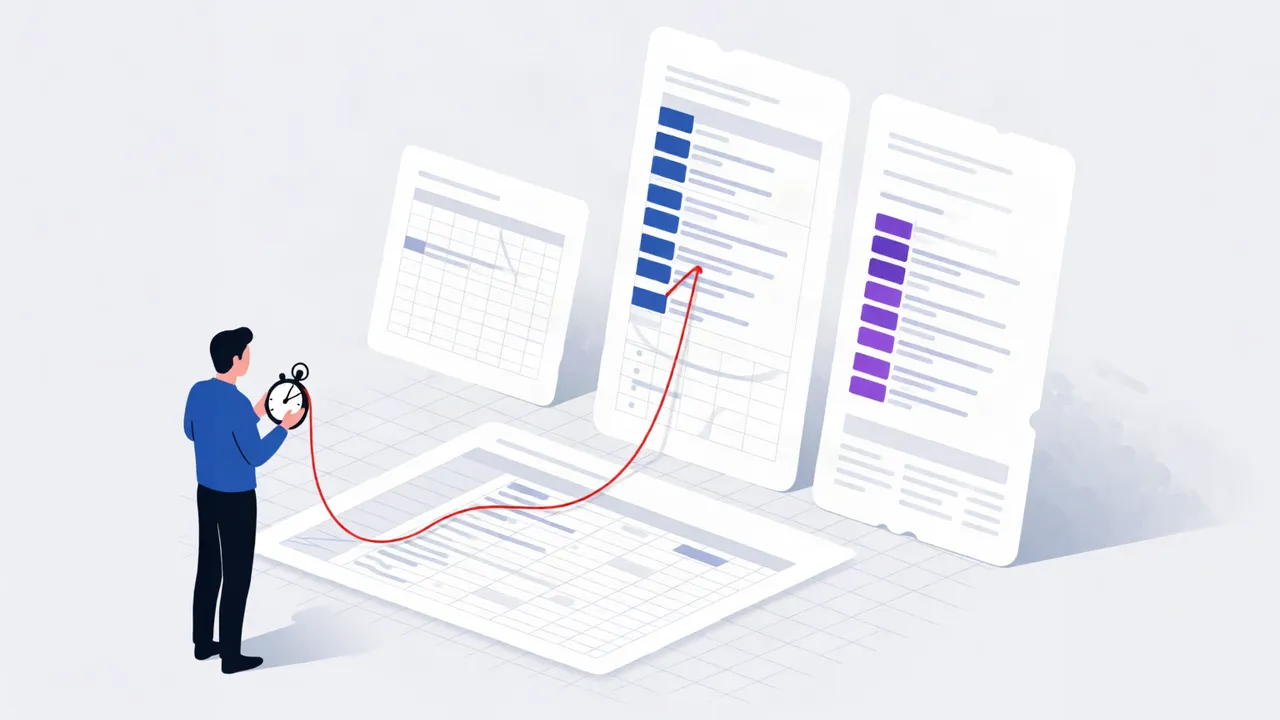
If an auditor asks where a specific training-data value came from and your team needs more than five minutes to answer, you do not have an auditable AI Act data lineage. That five-minute benchmark appears in a May 18, 2026 analysis of AI Act data lineage obligations, and the EU AI Act reached full applicability in August 2026. Under Article 10, data provenance and quality controls are part of the technical documentation for high-risk systems, so lineage is now compliance evidence, not optional housekeeping.
Key takeaways
- Article 10 requires training-data provenance, collection methods, and data-quality measures in technical documentation for high-risk AI.
- Column-level lineage with immutable hashes and timestamps is the smallest auditable unit we recommend.
- Automated lineage tools capture movement, but they do not prove data quality or replace a conformity assessment.
- Retain lineage records for the model's service life; the AI Act does not publish a universal retention window.
1. What does EU AI Act Article 10 require for high-risk AI data?
Article 10 obliges providers of high-risk AI systems to include data governance and data-quality practices in technical documentation. That means recording where training data came from, how it was collected, and how quality was checked. The EU AI Act became fully applicable in August 2026, so these records are now expected during conformity assessments, not treated as future planning.
Annex IV lists the technical documentation elements. For data, that includes provenance, characteristics, and quality monitoring. We treat this as a schema problem: if you cannot name the table, column, and row snapshot that produced a model weight, you cannot evidence compliance. I have seen teams try to satisfy this with a README file. It does not survive an auditor asking for column-level derivation. A May 18, 2026 analysis of AI Act data lineage makes the same point: if the answer takes more than five minutes, you do not have an auditable trail.
2. How is data provenance for high-risk AI different from ordinary data lineage?
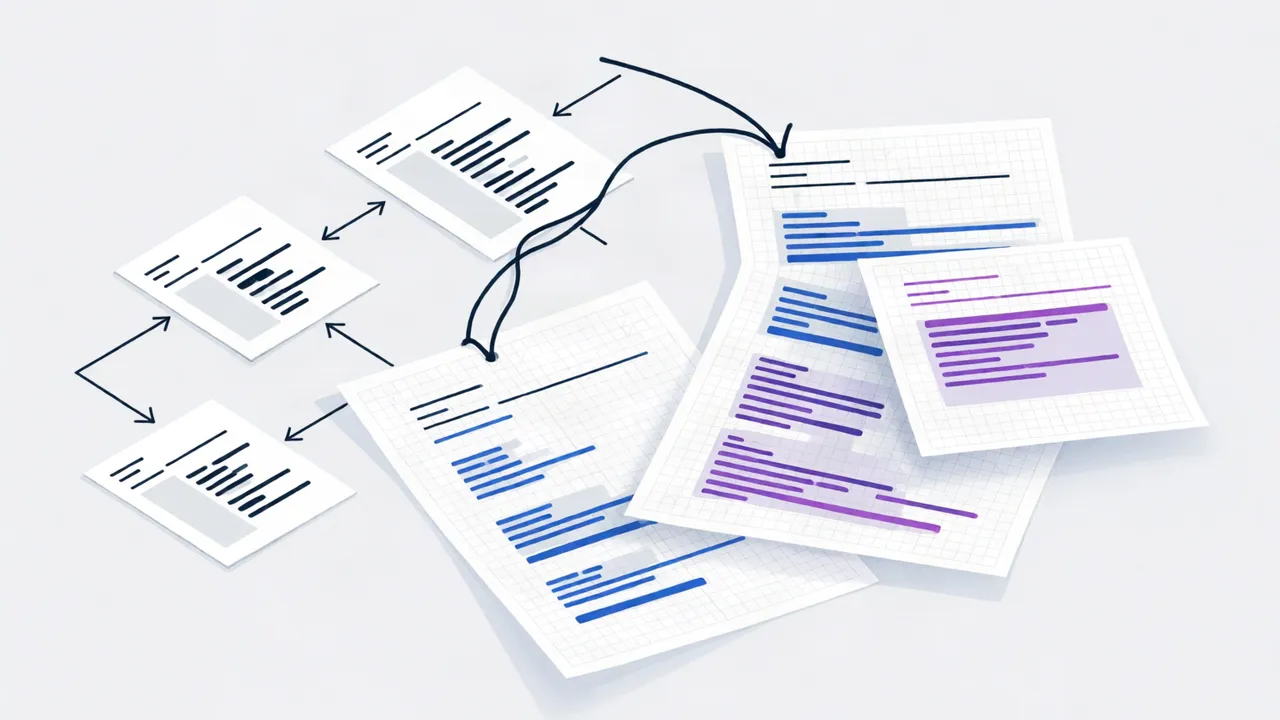
Ordinary lineage tracks table-to-table movement. AI Act provenance must tie a specific model version back to the exact data snapshot, preprocessing code, and validation result used to train it. The distinction matters because an auditor can ask, “Show me the data behind model version 1.3.0,” and a table-level pipeline graph is not specific enough.
For LLM and foundation-model work, provenance also means tracking training-data sources and filtering decisions. Atlan's March 15, 2026 guide to LLM training-data lineage describes provenance as the link between training data and model behavior, which is exactly what Article 10 documentation must support. In practice, we store a model-version identifier alongside every lineage event so the model can be reconstructed from the data record.
3. What does an auditable data trail for AI systems look like?
An auditable trail is append-only and immutable. Every event needs these fields:
| Field | Example | Why it matters |
|---|---|---|
event_time | 2026-11-19T14:22:01Z | UTC ISO-8601; proves when the event happened |
run_id | train-run-0042 | Links lineage to a specific training run |
model_version | v1.3.0 | Connects data to the model it produced |
dataset_id | customer-churn-2026Q3 | Unstable names break queries; use an ID |
source_uri | s3://data-lake/raw/churn/2026-09/ | Points to the exact object version |
sha256 | 3a7f... | Content hash; detects silent data changes |
transformation_id | clean-age-nulls | Tied to a Git commit SHA for code reproducibility |
operator_id | eng-44 | Who initiated the job |
If any field is missing, the trail breaks. We store these records as JSONL in an object store with object-lock enabled, so they cannot be edited after the fact.
4. How do you implement column-level lineage for AI training data?
Start by hashing the raw dataset before preprocessing. Then emit one lineage record per transformation. Here is the shape we use:
{
 "event_time": "2026-11-19T14:22:01Z",
 "run_id": "train-run-0042",
 "model_version": "v1.3.0",
 "input_dataset": {
 "dataset_id": "customer-churn-2026Q3",
 "uri": "s3://data-lake/raw/churn/2026-09/",
 "sha256": "3a7f1e9b...",
 "columns": ["customer_id", "age", "balance", "defaulted"]
 },
 "transformations": [
 {
 "transformation_id": "clean-age-nulls",
 "sql": "SELECT customer_id, COALESCE(age, -1) AS age, balance, defaulted FROM source",
 "target_columns": ["age"]
 }
 ],
 "output_dataset": {
 "dataset_id": "customer-churn-cleaned-v2",
 "uri": "s3://data-lake/processed/churn/v2/",
 "sha256": "9b1c4d22..."
 }
}
The critical field is transformation_id, which we map to a Git commit SHA. Without that binding, you cannot prove which code version produced the cleaned data. OpenLineage defines DatasetFacet and JobFacet structures that map to this shape; it is an open standard, not a product, and it works as the transport layer for these records.
5. Which automated data lineage tools fit AI compliance?
| Approach | Column-level detail | AI-model linking | Best for | Limitation |
|---|---|---|---|---|
| OpenLineage + Marquez | Yes, via facets | Weak; model metadata must be added | Open-source stacks | Requires self-hosting and custom facets |
| Apache Atlas | Yes, via classification | Moderate; governance-focused | Enterprise lakehouses | Heavy setup; AI fields are custom |
| Custom ingestion scripts | Yes, if you build it | Strong; you control the schema | Small teams with one pipeline | You own maintenance and audit gaps |
| AdaptivMapr schema mapping | Yes, schema-to-schema mapping | Limited to mapped fields | Regulated schema mapping | Does not certify AI Act compliance |
We built AdaptivMapr for schema mapping in regulated data. It captures field-level movement and stores the mapping file. It does not issue conformity opinions, and it does not guarantee AI Act conformity. That judgment remains with you and your notified body.
6. How do you map data transformations for AI model development?
Use this checklist before every training run:
- [ ] Snapshot raw training data and compute SHA-256 before preprocessing.
- [ ] Record preprocessing code as a Git commit SHA.
- [ ] Log each transformation with input columns, output columns, and the SQL or code reference.
- [ ] Link the cleaned dataset to a model version and training run ID.
- [ ] Store validation metrics (missing-value rate, class distribution, drift checks) with the same run ID.
- [ ] Archive the lineage record in the same object store as the model artifact.
We do this because an auditor may ask for the data behind model v1.3.0. If your preprocessing changed between runs and you did not record it, you cannot answer. Data contracts help here: they define the schema before data arrives, which prevents silent schema drift from breaking lineage. See our data contracts implementation guide for how to enforce that boundary.
7. How do you generate audit-ready documentation for AI data provenance?
Export the lineage log, join it to the model card and data sheet, and render a static bundle. Do not keep the only copy in a notebook.
Required artifacts:
- Data sheet: source, collection method, date range, known biases.
- Lineage manifest: the JSONL export from Step 4.
- Transformation log: every preprocessing step with its code hash.
- Model card: version, training-data ID, performance metrics, intended use.
- Quality report: missing values, outliers, and drift checks.
Store this bundle in a compliance repository, separate from the training environment. Separation of duties matters: the person who trains the model should not be the only person who can edit the lineage record. For more on connecting lineage to broader governance, see our technical guide to lineage and audit trails.
8. What are the trade-offs and limitations of automated data lineage?
| Trade-off | Detail |
|---|---|
| Automation vs. completeness | Tools capture pipelines they see. Manual ETL steps or local CSV edits are invisible unless you instrument them. |
| Column-level vs. dataset-level | Column-level is more precise but costs more storage and parsing. Dataset-level is cheaper but cannot answer column-level audit questions. |
| Real-time vs. batch | Real-time lineage is harder to audit retroactively if the stream is not replayable. Batch snapshots are easier to hash and store. |
| Our product's limit | AdaptivMapr maps schemas and records field movement. It does not assess whether your data is representative, fair, or sufficient under Article 10. |
I recommend starting with batch column-level lineage for training data. It is easier to hash and store than a stream. Add real-time lineage only if your model trains on live data and your regulator requires it.
9. How do you integrate data lineage into your AI governance framework?
Treat lineage as a gate in your model-promotion pipeline. No lineage record, no promotion to production.
- Add a lineage-check step to your CI/CD: the pipeline fails if the training run lacks a signed lineage manifest.
- Store the manifest with the model artifact in the same bucket, keyed by model version.
- Review lineage quarterly with compliance; check that retention covers the model's service life.
- Link to your existing data-mapping work. If you already map GDPR or CCPA data flows, extend those maps to include AI training datasets. Our GDPR and CCPA data-mapping guide covers the foundation.
If you want to test this on your own data, map a single training file in AdaptivMapr and export the lineage JSON. Start at adaptivmapr.com.
FAQ
How long must AI Act data lineage records be kept?
The AI Act does not set a universal retention period. Keep records for the model's service life and any sector-specific retention window that applies to your industry. When in doubt, retain longer rather than shorter.
Does OpenLineage satisfy Article 10 by itself?
No. OpenLineage is a transport and metadata standard. Article 10 compliance also requires data-quality evidence, governance policies, and a conformity assessment. OpenLineage helps you capture the technical trail; it does not certify it.
Can automated lineage replace manual documentation?
No. Automation captures what moved and how. It does not capture why data was selected, whether it is representative, or whether quality thresholds were met. Those require human judgment and documented policy.
What field names should I use for lineage records?
Use names that survive across systems: dataset_id, source_uri, sha256, transformation_id, run_id, model_version, and event_time in UTC ISO-8601. Consistency matters more than the exact names, as long as you document them.